Modernity and Economic Rise
From rice to Silicon Valley: Stories of a country in rapid ascent that only looks forward

Vietnam Transforms
Architecture, urban planning and harmony between tradition and modernity
The architectural legacy of the past
Traditional Vietnamese architecture reflects a deep connection with nature and spirituality. Ancient pagodas, stilt houses and wooden temples are built according to principles of balance and symmetry, often oriented based on cardinal points and the flow of natural energy (phong thủy).
In the northern countryside, one can still find communal houses (đình), meeting places for the community, decorated with mythological motifs and dragons carved in wood. These structures are not just architecture, but symbols of social and spiritual cohesion.
Cities on the move
The large Vietnamese metropolises, such as Hanoi and Ho Chi Minh City, are experiencing a phase of extraordinary transformation. Historic neighborhoods and new districts intertwine in an architectural mosaic where colonial, modern and vernacular coexist.
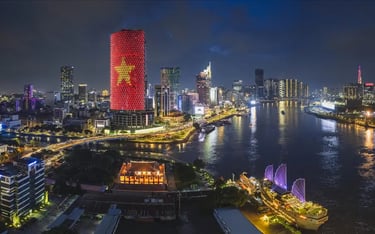
In Hanoi, ancient French buildings – today renovated – house museums, galleries and cafés, while new skyscrapers redesign the skyline next to lakes and temples. In Ho Chi Minh City, urban development is concentrated along the Saigon River, with projects for eco-neighborhoods, green public spaces and sustainable architectures.
Sustainable and bioclimatic architecture
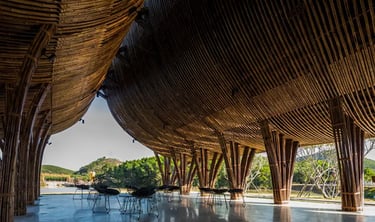
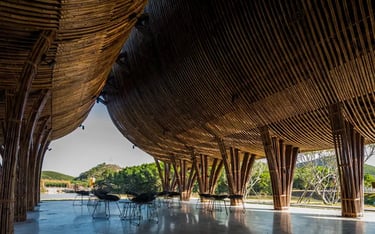
One of the most interesting trends of contemporary Vietnam is the attention to environmental sustainability. Numerous local architecture firms, such as Vo Trong Nghia Architects, are redefining the concept of living through projects that combine modern technology and natural materials.
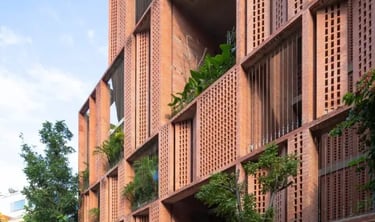
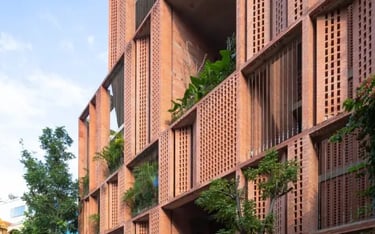
Bamboo, brick, stone and wood are integrated into buildings that favor natural ventilation, light and vertical greenery. Schools, homes and hotels thus become true architectural ecosystems, designed to reduce environmental impact and improve the quality of life.
Architecture as cultural identity
In today's Vietnam, building also means preserving collective memory. Many architects and urban planners work to reinterpret traditional forms in a contemporary key: curved roofs, internal courtyards and shared spaces are reinvented as elements of coexistence and dialogue between past and future.
New public architectures, such as museums, schools and community spaces, tell of a Vietnam that wants to grow while keeping its cultural soul alive.
Life in urban spaces
Vietnamese urban planning is not just about buildings, but the people who inhabit them. Cities are living organisms, in which the market, the street and the house form a dynamic and creative social fabric.
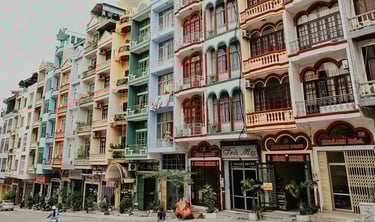
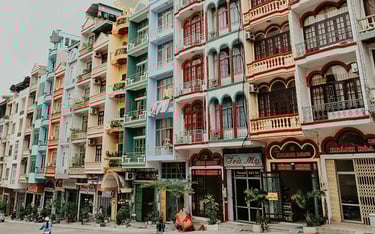
In popular neighborhoods, narrow facades and "tube houses" tell of a unique way of experiencing spaces: every centimeter is optimized, every floor is a story. Today, new urban projects seek to return public space to citizens: parks, cycle paths and green squares become places for meeting and sharing, a sign of a new vision of a more inclusive and sustainable city.
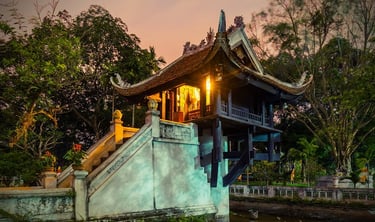
Pagoda
Skyline di Ho Chi Minh City
Vo Trong Nghia Architects
Premier Office

Tube houses
The architecture and urban planning of contemporary Vietnam represent the evolution of a millennial culture that knows how to reinvent itself without losing its own identity. Every building, every street, and every neighborhood are pieces of a mosaic in which tradition and innovation coexist in balance. Vietnam does not just build cities: it builds possible futures, where beauty is also responsibility, memory, and harmony with nature.
Architectures in Equilibrium
Are you ready for relaxation? Explore our selection of hotels and apartments: you will find the ideal accommodation to make your holiday unforgettable.
Through these links you can support the site free of charge
Contact Us
© 2025. All rights reserved.
Claim Your Guide Now!
Free
Your Complete 7-Day Vietnam Itinerary