

When, Where and Why to Change
The Best Rate Map
The Vietnamese Dong (VND) Dilemma
Ecco la traduzione in inglese americano, mantenendo la formattazione e usando il grassetto:
Money management in Vietnam is often a critical point for travelers. Although the Vietnamese Dong (VND) is the only legal currency, the US Dollar (USD) and, to a lesser extent, the Euro (€) play specific roles in the currency exchange market.
This article analyzes the optimal strategy for currency conversion, identifying the best places to obtain the best exchange rate and avoiding the pitfalls that can erode your travel budget.
The currency market in Vietnam
Currency Logistics - When to Use What
Vietnam operates almost entirely in Dong, but it is useful to understand the role of foreign currencies in the practical context:
1. Vietnamese Dong (VND)
Use: Essential and almost exclusive for all daily purchases, local transport, street food, markets, and small buys.
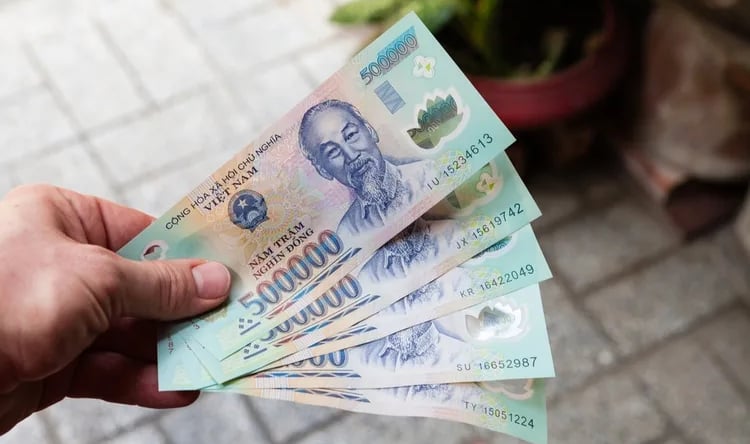
Practical Note: The VND has many banknotes with numerous zeros. The main denominations are:
10,000 VND ($\sim$$0.43)
20,000 VND ($\sim$$0.86)
50,000 VND ($\sim$$2.15)
100,000 VND ($\sim$$4.30)
200,000 VND ($\sim$$8.60)
500,000 VND ($\sim$$21.50)
Tip: Memorize the denominations and colors of the banknotes to avoid mistakes when giving or receiving change.
2. US Dollar (USD)
Use: Accepted (but not always convenient) for:
Visas (E-Visa or Visa on Arrival)
Bookings for luxury tours
Some high-end international hotels
Emergency situations
Critical Tip: Carry USD for specific necessities (e.g., visa payment on arrival: 25–50 USD), but always exchange it for VND for daily expenses. The exchange rate that small shops and private vendors apply for the USD is almost always unfavorable (a margin that is 5–10% worse).
3. Euro (€)
Use: Not accepted for direct transactions. Its role is exclusively as a reserve currency to be converted into VND.
Practical Advantage: The Euro is the most convenient currency for Italian travelers. In many reliable exchange houses, the Euro offers a final rate that is marginally better than the USD (a difference of 0.5–1%), although the variation depends on the daily market.
The Best Rate Map - Where and When to Switch
The "where" you choose to exchange your money is the factor that most impacts the efficiency of the exchange. Here is the ranking by convenience:
Official Jewelers and Gold Banks (Best Rate: 98-99% of the real rate)
Why They Are the Winning Choice: These establishments systematically offer the best exchange rate due to their rapid turnover of currency and gold. Their rate is often 2–4% better than banks and 5–8% better than airports.
Where to find them:
Hanoi:
Hoan Kiem Lake Area and Old Quarter
Ha Trung Street (concentration of reliable jewelers)
Hang Bac Street (Silver Street)
Ho Chi Minh City (HCMC):
The quadrilateral area around Ben Thanh Market
Le Loi Street and Nguyen Hue Street
District 1 Area (high concentration)
How to recognize them:
Signs with "Gold Shop" or "Tiệm Vàng" written on them
Window displays featuring gold and jewelry
Blackboards with updated exchange rates displayed outside
Always crowded (a sign of reliability)
Procedure:
Compare the rates displayed at 2–3 nearby shops.
Enter the one with the best rate.
Show your passport (not always required).
Carefully count the money received.
National Banks (Rate: 96-97% of the real rate)
Recommended banks:
Vietcombank (the most widespread)
BIDV (Bank for Investment and Development of Vietnam)
Agribank
Advantages:
Total security and transparency
Official receipt
Controlled environment
Disadvantages:
Slightly less competitive rates (2–3% worse than jewelry shops)
Require time (queues, bureaucracy)
Mandatory documentation (passport)
Limited hours (8:00 AM–4:00 PM, Mon–Fri)
When to use them:
Exchanging large sums (over €500)
If you seek maximum security and traceability
If you are not in a hurry
Authorized Exchange Offices (Rate: 95-96% of the real rate)
Characteristics:
Present in tourist areas
Extended hours (including weekends)
Quick procedure
Attenzione: Verifica sempre che siano autorizzati (licenza esposta) per evitare truffe.
Airports (Rate: 90-93% of the real rate - AVOID)
Main airports:
Hanoi Noi Bai (HAN)
Ho Chi Minh Tan Son Nhat (SGN)
Da Nang (DAD)
Critical Disadvantage: Significantly worse rate (7–10% lower than the real rate).
Recommended strategy:
ONLY exchange a small amount (€50–100 or $50–100) to cover:
Taxi/Grab/Bus to the city center (150,000–400,000 VND)
First meal and water (100,000–200,000 VND)
Immediate emergencies
Reserve the bulk of your exchange for the cities.
Hotels and Shops (Rate: 85-90% - NOT RECOMMENDED)
Why avoid them:
Very unfavorable rates (10–15% margin)
Often do not clearly display the applied rate
Risk of scams or misunderstandings
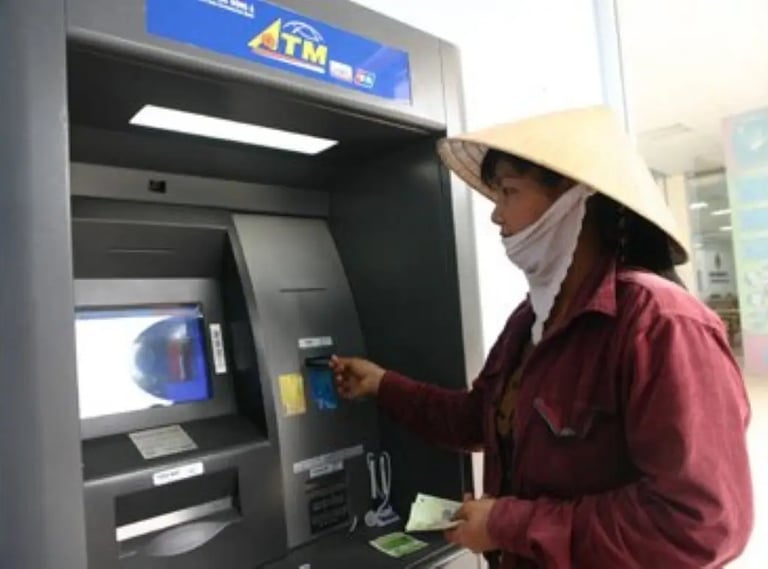
The use of ATMs (cash machines) is a valid and often the most convenient alternative, but it requires a strategy to minimize fees.
The Double Commission (The Trap to Know)
Every ATM withdrawal involves two separate fees:
1. Your U.S. Bank:
Fixed International Withdrawal Fee: $3–$6
Foreign Transaction Fee (Percentage): 1–3%
Total: Can reach 5–7% of the withdrawn amount
2. The Vietnamese Bank:
Fixed Transaction Fee: 30,000–60,000 VND (~$1.20–$2.50)
Varies by the ATM's bank.
Practical Example:
Withdraw $100: You pay ~$8–11 in total fees (8–11%)
Withdraw $200: You pay ~$11–14 in total fees (5.5–7%)
Conclusion:
The more you withdraw, the more you save proportionally (percentage-wise).
Efficient Withdrawal Strategy
Golden Rule: Always maximize the amount withdrawn to dilute the cost of the fixed fees.
Maximize Your Withdrawal:
Always withdraw the maximum allowed amount:
Standard Limit: 3,000,000 VND ($\sim\$120$)
High Limit: 5,000,000–10,000,000 VND ($\sim\$200–\$400$)
Some VietinBank ATMs: Up to 15,000,000 VND ($\sim\$600$)
Recommended ATMs (for High Limits & Low Fees):
These banks generally offer the highest withdrawal limits and lowest local fees (around 30,000 VND):
🥇 Vietcombank (Fee $\sim30,000$ VND, Limit $\sim5,000,000$ VND)
🥈 VietinBank (Fee $\sim30,000$ VND, High Limit)
🥉 BIDV (Fee $\sim30,000$ VND)
Citibank (If available, often with no local fee)
ATMs to Avoid:
ATMs inside shopping centers (High fees)
ATMs without a clear bank logo
Machines with damaged screens or suspicious signs (potential skimming risk)
Recommended Cards for Travelersi
Best options to reduce costs:
Revolut (Real exchange rate, often no fees up to a monthly limit/tier)
Wise (formerly TransferWise) (Interbank rate, transparent fee structure)
Capital One/Schwab Checking (Popular US options that often waive foreign transaction fees and ATM fees)
Traditional Credit Card: Use only as an emergency backup (Fees typically 3–5%).
ATM Safety Tips
Always use ATM:
Inside banks or shopping centers
In areas with visible camera surveillance
During the day and in crowded areas
Avoid ATM:
Isolated or on poorly lit streets
With suspicious devices on the card reader (potential skimmers)
Requiring multiple PIN entries







Contact Us
© 2025. All rights reserved.
Claim Your Guide Now!
Free
Your Complete 7-Day Vietnam Itinerary