

Practical Recommendations
For Travelers (45+ Days)
Apply for the E-Visa BEFORE departure (processing time: 3–5 business days).
Print a copy of the visa to present at the airport.
Monitor your dates using an app or reminder system.
Consider the multiple-entry option if you plan to exit to neighboring countries.
For Travelers (< 45 Days)
Verify your passport validity (6+ months residual validity).
Keep track of your entry date to avoid exceeding the 45th day.
Consider a safety buffer (depart by the 43rd day to avoid unforeseen issues).
Special Situations
If you are currently in Vietnam under the visa exemption and decide to prolong your stay beyond the 45th day, it is technically possible to reset your legal status:
Exit Vietnam (e.g., fly to Thailand or Cambodia).
Apply for the E-Visa while abroad.
Re-enter Vietnam using the new, approved visa.
⚠️ Warning: This practice may be viewed negatively by authorities if repeated frequently, potentially flagging you as attempting to circumvent the standard immigration process.
Conclusions
Vietnam's visa reform represents an extraordinary opportunity for Italian tourism, but it demands precise bureaucratic awareness. The gap between the 45-day automatic exemption and the 90-day E-Visa creates a dangerous "gray zone" where an estimated 29% of long-term travelers may unknowingly fall into overstay.
The key is simple: if your trip exceeds 45 days, the E-Visa is not an option—it is a legal obligation. The expenditure of $25–$50 USD is negligible compared to the risks of fines, deportation, and blacklisting, which could compromise not only your current trip but also future opportunities to return to Vietnam.
Official Sources and Resources:
Vietnam E-Visa Official Portal: https://evisa.xuatnhapcanh.gov.vn
Ministry of Public Security (Immigration Department): (Reference for official policy changes and regulations regarding overstay penalties.)
Local Embassies/Consulates of Vietnam: (For the most current advisory and clarification on individual cases.)


The Impact of the 90-Day E-Visa on Tourist Flows
and why 29% are at risk of Overstay

The New Freedom and the New Risks
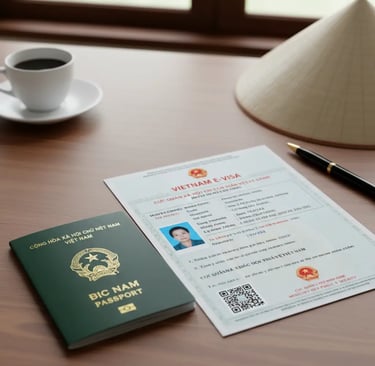
Since August 15, 2023, Vietnam has revolutionized its visa policies to stimulate post-pandemic tourism. For Italian citizens, the two most significant changes have been:
The extension of visa-free stay from 15 to 45 days
The introduction of an E-Visa valid for up to 90 days (single or multiple entry)
This increased flexibility has opened the door for "slow" travelers and digital nomads. However, the coexistence of two different regimes is creating significant confusion, leading a considerable number of tourists to unknowingly risk an overstay (staying beyond the terms of the visa/exemption).
This analysis explores the impact of these new regulations on Italian tourists and identifies the critical point that, according to our projections, exposes approximately 29% of long-stay Italian travelers to the risk of penalties.
1: The Two Entry Regimes for Italian Citizens
It is crucial to distinguish between the two legal pathways for entering Vietnam:
A. Visa Exemption (Free and Automatic)
Maximum Duration: 45 days
Entry Type: Single (upon exit, the duration resets, allowing a new visa-free entry for another 45 days)
Key Advantages:
Administrative simplicity
Zero cost
Immediate operability upon arrival
Critical Limit: Exceeding the 45th day automatically results in an overstay, subjecting the traveler to progressive penalties.
B. E-Visa (Electronic Visa - Upon Request)
Maximum Duration: 90 days
Entry Type:
Single (approx. $25 USD)
Multiple (approx. $50 USD)
Key Advantages:
Ideal for extended stays (up to 3 months)
Perfect for those using Vietnam as a base to explore Laos and Cambodia
Flexibility for digital nomads and retirees
Process: Online application through the official government portal:
⚠️ Critical Note: The passport must have a residual validity of at least six months from the date of entry for both options.
2: The Bureaucratic Misunderstanding: Why 29% Risk Overstay
The main risk lies in a fatal assumption: many tourists believe that, because a 90-day visa is available, everyone can automatically stay up to that limit.
The Fatal Error
Many Italian travelers, upon learning superficially about the 90-day E-Visa, fail to proceed with the online application, assuming it has become the new automatic general rule. They overlook the fact that the standard visa-free entry only guarantees 45 days.
Risk Projection (Scenario Based on Industry Data)
Profile of Travelers at Risk:
"Slow Travel" travelers (retirees, long-term backpackers)
Digital Nomads planning work-cations
Tourists combining Vietnam with other Southeast Asian countries
The 29% Estimate:
Based on global "slow travel" trends and ENIT data on Italian tourism in Asia, we estimate that approximately 29% of Italian tourists plan stays exceeding 45 days. Of these:
60-70% correctly apply for the E-Visa.
30-40% fail to apply due to confusion or misinformation.
Legal Consequence:
These travelers will exceed the 45th day with only the exemption, automatically resulting in an overstay from the 46th day onward.


The Vietnamese visa regime
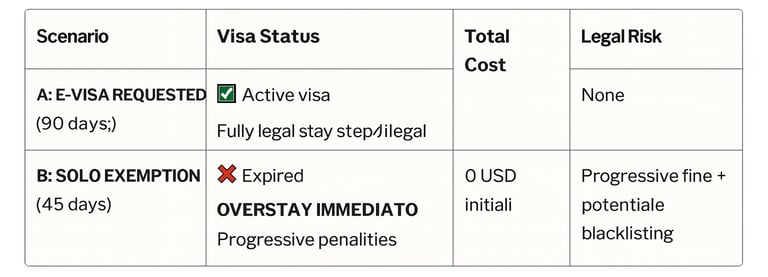
Comparison Table: Two Scenarios for a 60-Day Trip
Scenario A: E-VISA APPLIED (90 days) Visa Status: ✅ Visa is Active, Result on Day 46: Completely Legal Stay, Total Cost: ~$25–50 USD, Legal Risk: None, Scenario B: EXEMPTION ONLY (45 days), Visa Status: ❌ Expired, Result on Day 46: IMMEDIATE OVERSTAY, Total Cost: $0 USD initial, Legal Risk: Progressive fine + potential blacklisting
Sanctions for Overstay in Vietnam
1–15 Days Overstay: Fine of approximately 500,000–2,000,000 VND ($20–$80 USD).
16–30 Days Overstay: Increased fine plus possible deportation.
Over 30 Days Overstay: Severe fine plus deportation and blacklisting (re-entry ban for 1 to 5 years).

Contact Us
© 2025. All rights reserved.
Claim Your Guide Now!
Free
Your Complete 7-Day Vietnam Itinerary