

Section 3: Comparative Analysis – Data That Reverses the Choice
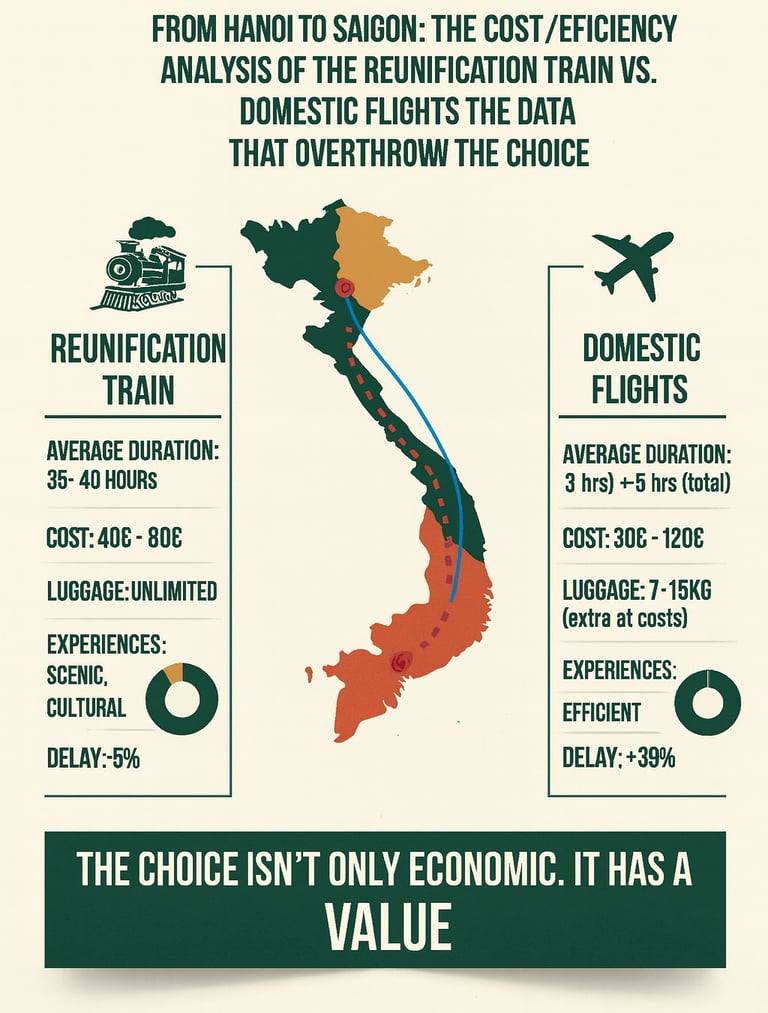
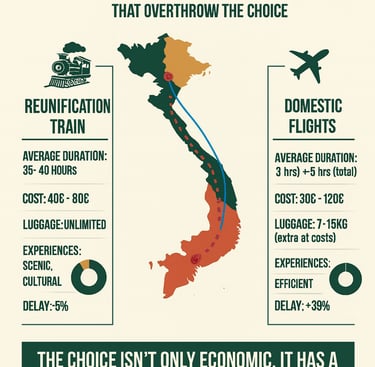
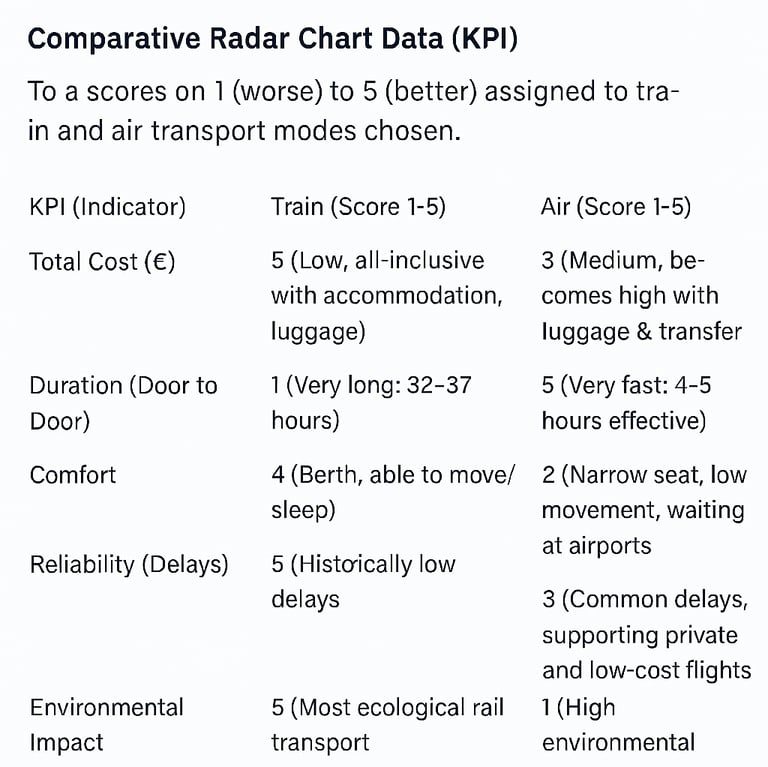
This is where the heart of the analysis comes in. We directly compare the two vehicles based on the crucial parameters.
Section 4: Conclusions – When Cost Isn't the Only Factor (and Sometimes Not Even the Main One)
For the Budget-Conscious (and Time-Rich): The train can be surprisingly competitive, especially when considering the savings on a night of accommodation and the lack of baggage fees.
For Efficiency (and Flexible Budget): The plane is unbeatable for speed, but only if you are aware of all the additional costs and are willing to pay them.
The Overturning Choice: The plane is not always the most 'economical' choice when considering the total cost for a long journey and the necessity of an extra hotel night.
The train can offer superior overall value, transforming the transfer into an integral part of the experience.
Sources and Methodology:
Vietnam Railways (official schedules and fare data)
Airline websites (Vietnam Airlines, VietJet Air, Bamboo Airways – fare and baggage allowance data)
Historical flight delay analysis (sources like FlightAware, OAG Aviation – if available for Vietnam)
Airport-to-city transfer cost estimates (based on average taxi/bus fares).
Hanoi to Saigon: Cost-Efficiency Analysis
Reunification Train vs. Domestic Flights
The Data That Reverses the Choice
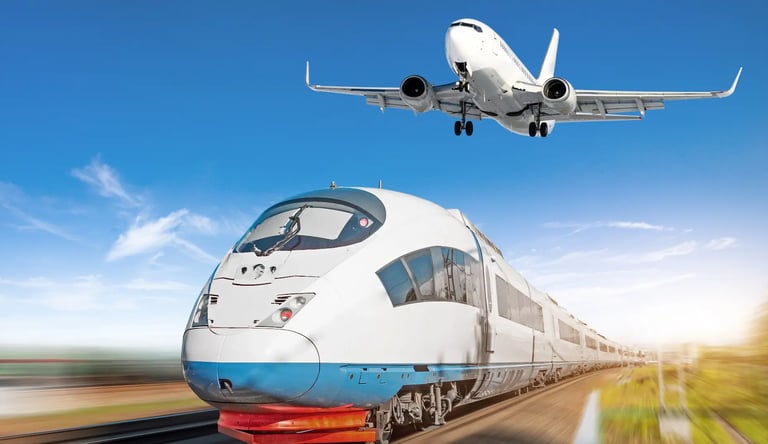
The Vietnamese Traveler's Dilemma
For anyone planning a trip to Vietnam, one of the crucial decisions is how to cover the nearly 1,700 km distance between the capital, Hanoi, and the bustling Ho Chi Minh City (Saigon). The choice often boils down to two giants: the evocative Reunification Express Train or rapid Domestic Flights.
But which option delivers the best cost-to-efficiency ratio? This article moves beyond romanticized descriptions, analyzing the concrete data to help you make the most informed decision—a decision that may overturn some common assumptions.
The Reunification Express – A Journey Through History
The "Reunification Express" (officially the North-South Express) is more than just transportation; it’s an experience. But how much does it truly "cost" in terms of time and money?
Time Metrics
Total Journey Time: 32–37 hours (depending on the specific train and number of stops).
Effective Time at Destination: Consider arrival directly in the city center and the absence of extra check-in or security control procedures.
Opportunity Cost: Nearly two full days consumed by travel.
Cost Data
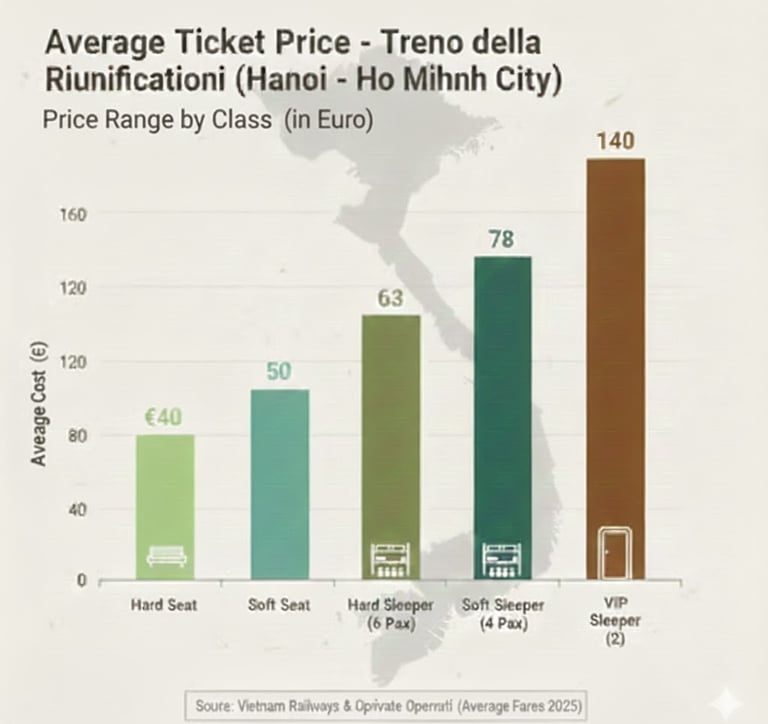
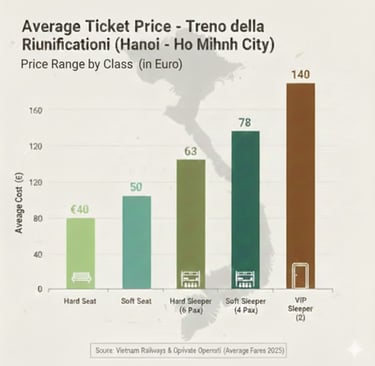
Average Price Range: €40 – €80 (for an air-conditioned sleeper berth, depending on class and how far in advance you book).
Hidden Costs: Meals on board (inexpensive), absence of baggage fees (a critical budgetary advantage).
Comfort and Logistics
Comfort & Services: Analysis of the different classes (hard seat, soft seat, hard sleeper, soft sleeper), availability of toilet facilities, and food on board.
Experience Value: Objective description of the cultural and scenic value offered, including the opportunity to truly witness the changing landscape .
Reliability: Data on average delays (historically low for long-distance trains in Vietnam).
Section 2: Domestic Flights – Speed at the Service of Time
Vietnamese airlines (Vietnam Airlines, VietJet Air, Bamboo Airways) offer frequent and fast connections between Hanoi and Ho Chi Minh City. But does speed always come with a price tag?
Data on Total Duration (Door-to-Door):
Flight Duration: Approximately 2 hours.
Additional Time: 1 hour for check-in and security checks + 1-2 hours for airport-to-city transfers (estimated total: 4–5 hours).
Cost Data:
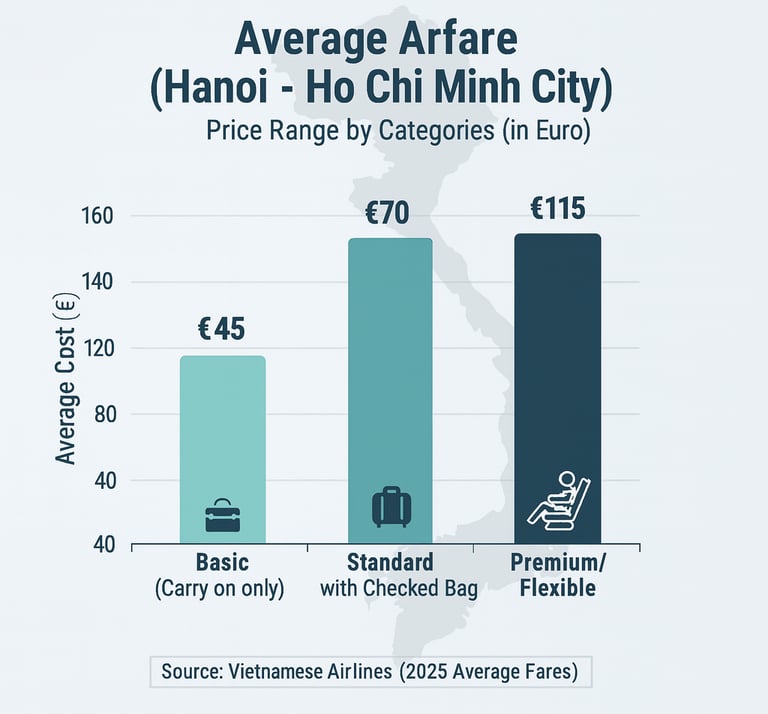
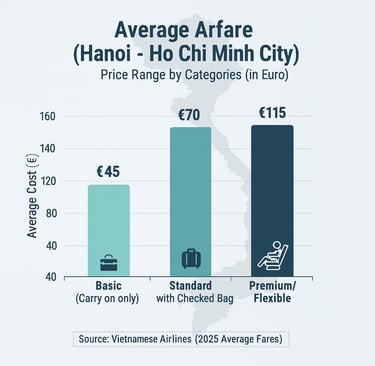
Average Price Range: €30 - €120 (depending on the airline, class, and booking lead time).
Hidden Costs: Often ignores the base rate for checked baggage (typically €15–€20), extra costs for seat selection, and in-flight meals.
Effective Cost: Often higher than expected when all supplements are included.
Comfort and Services: Comparison of major Vietnamese airlines in terms of basic services, baggage allowance, and reputation for delays.
Experience: Focused on efficiency and the ability to maximize time at the destination.
Reliability: Data on the delay rates of domestic airlines (historically higher than the train, especially for low-cost carriers)."
Contact Us
© 2025. All rights reserved.
Claim Your Guide Now!
Free
Your Complete 7-Day Vietnam Itinerary