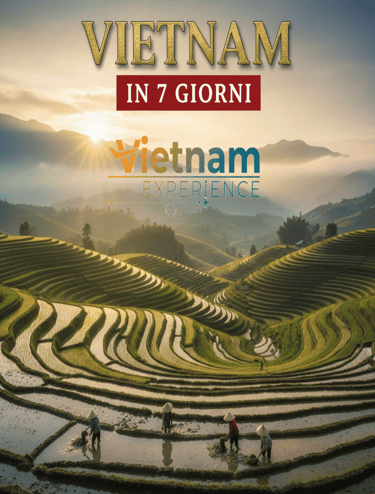
Transform your memories into works of art
From travel to memory, from photo to emotion

A selection based on budget and priorities:
The 18-55mm standard zoom – Maximum versatility
Versatile and lightweight, it covers most situations encountered during travel: urban landscapes, environmental portraits, architecture, and everyday details.
Those using Canon mirrorless cameras can opt for the
Those using Canon mirrorless cameras can opt for the Canon RF-S $18$-$45mm$ $f/4.5-6.3$ IS STM, which is even more compact than the EF-S kit, making it ideal for light travel. Alternatively, for maximum versatility, one can choose the Canon RF-S $18$-$150mm$ $f/3.5-6.3$ IS STM (the superzoom).
For those working with Micro Four Thirds systems, the
For those working with Micro Four Thirds systems, the Olympus M.Zuiko $14$-$42mm$ $f/3.5-5.6$ EZ is a small, retractable gem, sharp and discreet, which pairs perfectly with OM System bodies..
And if you're looking for something that offers excellent performance even in low light, the option
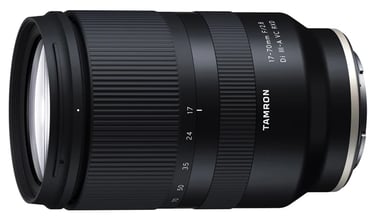
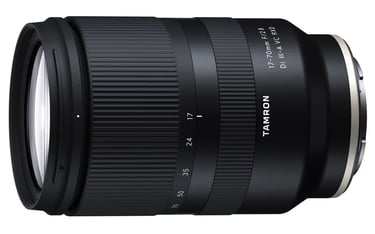
The Tamron $17$-$70mm$ $f/2.8$ Di III-A VC RXD is an excellent choice for those who want greater control over depth of field and superior optical quality at an accessible price.
The 50mm f/1.8 – the art of portraiture
The $50mm$ $f/1.8$ is the lens that allows you to get close to people and capture their essence.
On Canon mirrorless cameras, the new
The Canon RF $50mm$ $f/1.8$ STM: a compact, sharp, and indispensable format, excellent for those who love street photography and natural portraits..
For Olympus, the perfect counterpart is the
The Olympus M.Zuiko $45mm$ $f/1.8$: a small telephoto lens capable of producing high-impact images with silky backgrounds and deep colors.
Those looking for a more "studio-like" rendition even while traveling can choose the excellent prime lens.
Those looking for a more "studio-like" rendition even while traveling can choose the excellent prime lens Tamron SP $45mm$ $f/1.8$ VC, which adds image stabilization and a solid build, ideal for those who want a high-quality, all-around lens.
The $50mm$ is the lens that transforms travel photography into emotion photography.
The 10-24mm wide angle – for breathtaking panoramas
For those seeking lightness and sharpness at an affordable price, on Canon mirrorless cameras the:
For those seeking lightness and sharpness at an affordable price, on Canon mirrorless cameras the Canon RF-S $10$-$18mm$ $f/4.5-6.3$ IS STM is the most compact and modern option, perfect for travelers who do not want to sacrifice quality on landscapes.
The Olympus M.Zuiko $9$-$18mm$ $f/4-5.6$ is the perfect alternative for those using Micro Four Thirds: small, lightweight, and always ready to capture the vastness of the rice paddies or Ha Long Bay.
For those who desire a robust build and professional performance, especially in low-light conditions (e.g., sunsets or sunrises), the:
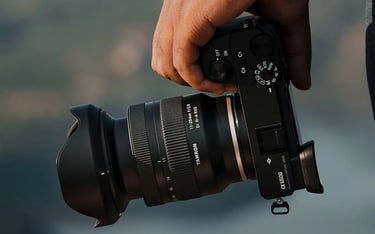
For those who desire a robust build and professional performance, especially in low-light conditions (e.g., sunsets or sunrises), the Tamron $11$-$20mm$ $f/2.8$ Di III-A RXD is the superior choice: it offers a constant $f/2.8$ aperture and excellent uniform rendering, with great control over distortion.
To Tell Vietnam
When traveling in Vietnam, every scene is a story: the morning light hitting the markets of Hanoi, the sweeping rice terraces of Sapa, the golden sunsets over Ha Long Bay.
To capture all of this, you don’t need to bring your entire photographic arsenal. Just three carefully chosen lenses are enough to transform every memory into a work of art.
The Essential Technical Features
Choosing a lens isn't just about deciding on the focal length (24mm, 50mm, etc.); it means evaluating the technical specifications that will determine its effectiveness in Vietnam's unpredictable climate. Here are the four critical factors to consider before purchase:
1. Maximum Aperture: The Key to Low-Light and Bokeh
The maximum aperture (indicated as $f/X.X$) is arguably the most important specification for a photography trip.
Brightness (Low-Light Performance): In Vietnam, lighting is often challenging: covered markets, temple interiors, or the nighttime ambiance of Hoi An. A wide aperture (e.g., $f/1.8$ or $f/2.8$) lets in much more light, allowing you to keep the ISO low and the shutter speed high, preventing blurry and grainy photos.
Subject Isolation (Bokeh): A wide aperture is essential for portraits (street portraits). It allows you to achieve a razor-sharp focus area on the subject (e.g., a food vendor) while the background dissolves into a pleasant blur (bokeh), isolating the person from the surrounding chaos.
Practical Recommendation: For the Standard Zoom: Look for a constant aperture of $f/2.8$ or a variable $f/2.8$-$4$. For the Prime Lens (50mm): An aperture of at least $f/1.8$ is imperative.
2. Weather Sealing: Protection from Humidity
Just like the camera body, the lens must also be able to withstand the Vietnamese climate.
Extreme Humidity: Vietnam has constant humidity near 90%. This is the primary cause of fungus and mold (the "silent killer") that can develop inside the lenses—a costly and sometimes irreparable damage.
Rain and Dust: The lens seals prevent the infiltration of dust and sand in rural areas, and water splashes during tropical downpours. Opting for lenses with a professional construction ensures reliability and longevity under challenging tropical conditions.
Practical Recommendation: If you have chosen a weather-sealed camera body, pair it with a lens marked WR (Weather Resistant) or PRO (Olympus) to ensure maximum protection for your system.
3. Optical Stabilization (IS/VC/OSS): Handheld Shooting
Lens stabilization (called IS in Canon, VC in Tamron, OSS in Sony) is a critical factor for the trip.
Extreme Humidity: Vietnam has constant humidity near 90%. This is the primary cause of fungus and mold (the "silent killer") that can develop inside the lenses—a costly and sometimes irreparable damage.
Rain and Dust: The lens seals prevent the infiltration of dust and sand in rural areas, and water splashes during tropical downpours. Opting for lenses with a professional construction ensures reliability and longevity under challenging tropical conditions.
Practical Recommendation: Stabilization is particularly useful on telephoto lenses (such as the $150mm$ superzoom) and on lenses with a limited maximum aperture (such as kit zooms), where every gained stop of light is precious.
4. Size and Weight: The Rule of Portability
A heavy lens is a lens that is likely to remain in the hotel.
Balanced System: For Vietnam, a lens must be ergonomically balanced on the mirrorless body. A lens that is too large or heavy (often older, adapted DSLR models) will make the system uncomfortable to carry for 10 consecutive hours.
Maximum Compactness: The wide-angle and the $50mm$ prime lens should be as compact as possible. Their average weight should be between $150g$ and $300g$ at most..
Practical Recommendation: For intensive travel photography, prioritize native mirrorless lenses (e.g., Canon RF-S, Olympus M.Zuiko) which are designed for maximum lightness.
Recommended Models: Detailed Analysis
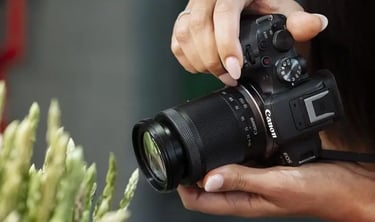
Travelling lightly
With a standard zoom lens, a 50mm f/1.8 prime, and a wide-angle lens, you can cover virtually every situation without weighing down your backpack.
The Power of Three
Three lenses provide three distinct views of the same country:
Standard Zoom: The versatility needed for daily coverage.
50mm Prime: The intimacy of a classic focal length.
Wide-Angle: The grandeur to capture expansive landscapes.
With this essential trio, you can tackle any photographic adventure in Vietnam, from the chaos of the streets to the silent mountain sunrises.
Select the equipment that’s right for you now and prepare to photograph your Vietnam trip like a pro!
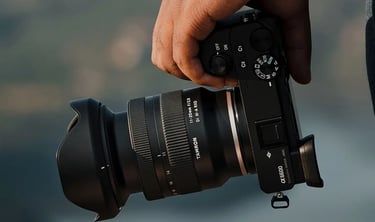
Canon RF-S 18-150 mm
Tamron 17-70 mm
Tamron 11-20mm
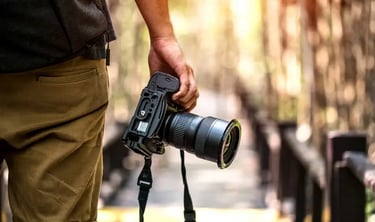
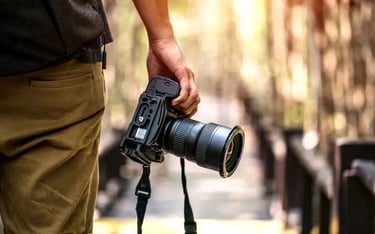

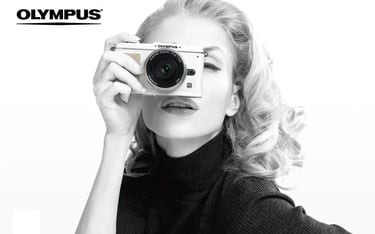
Canon, Olympus and Tamron lenses
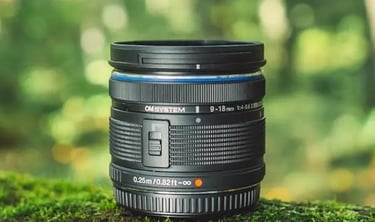
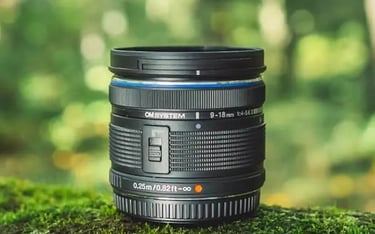
Olympus M.Zuiko 9-18 mm
For absolute peace of mind, remember that your equipment isn't the only thing you need to protect: eSIM Technology ensures constant connectivity for emergencies and immediate cloud backup, while Comprehensive Travel Insurance is the true protection against health mishaps or damage/loss of your valuable gear.
Extra Digital Tip:
Full Coverage: Connection and Security
Through these links you can support the site free of charge
Contact Us
© 2025. All rights reserved.
Claim Your Guide Now!
Free
Your Complete 7-Day Vietnam Itinerary